Focus · Capitals Wire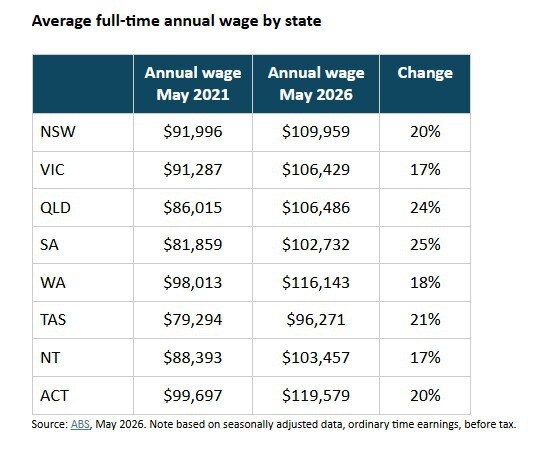
A fourth rate hike could deliver a brutal new blow to battered home buyers, but South Australians may be hit hardest on the mainland where borrowers have stretched further and faster than almost anywhere else. New Canstar analysis shows a buyer on the average full-time wage of $108,650 would be able to borrow about $11,200 less if the Reserve Bank lifts the cash rate again on Tuesday. For a typical borrower, that would take the total reduction in borrowing capacity to $47,400 this year, or about 9 per cent, based on an owner-occupier with no other debts, no dependants and minimal expenses.
While Tasmania is tipped to wear the biggest hit nationally, South Australia stands out as the mainland state under the most pressure, with the lowest average mainland wage at $102,732 and borrowers already carrying sharply larger mortgages than they were just a few years ago. Source: Canstar According to ABS data, the average new owner-occupier loan in South Australia has surged from $401,000 in June 2021 to $672,000 in June 2026, a staggering 68 per cent jump. That is the biggest increase of any mainland state over the period.
Western Australia was close behind, with average new loan sizes climbing 67 per cent from $430,000 to $720,000, while Queensland rose 63 per cent from $461,000 to $751,000. Source: Canstar The Northern Territory recorded a 39 per cent rise from $393,000 to $545,000, Tasmania rose 34 per cent from $384,000 to $516,000, the ACT climbed 21 per cent from $550,000 to $666,000, New South Wales lifted 20 per cent from $704,000 to $842,000 and Victoria posted the smallest increase at 17 per cent from $567,000 to $664,000. Which states would be hit hardest?
From a wage perspective, Tasmania would cop the biggest borrowing power hit nationally if the RBA hikes again, with an average annual wage of $96,271, followed by South Australia at $102,732. The Northern Territory sits at $103,457, while Victoria and Queensland are both at $106,439. New South Wales has an average wage of $109,959, while the biggest wage earners are in Western Australia at $116,143 and the ACT at $119,579.
Reserve Bank Governor Michelle Bullock. Canstar data insights director Sally Tindall said another increase on Tuesday would mean yet another haircut to the maximum amount buyers can borrow from the bank. “For a person on the average wage, that’s a drop of $11,200 to their maximum home buying budget.
This might not sound like much in the context of buying a property, but they’re already had three trims to their budget this year. A fourth hike would tally up to a pretty hefty cut of $47,400,” she said. “If rates go up five times this year, as ANZ is forecasting, an average-wage borrower could see more than $58,000 wiped from their borrowing capacity.
That’s not a rounding error – it could be the difference between being able to bid on a property and having to sit on the sidelines.” Could there be another hike after Tuesday? ANZ is the only major bank forecasting a fifth rate rise in November, which would take the cash rate to 4.85 per cent. If that happens, the same average-wage borrower would lose a further $10,700 in borrowing power, taking the total fall since the start of the year to $58,100, or 11 per cent.
Ms Tindall said South Australia was particularly exposed because home prices had risen so sharply that many borrowers had been forced to take on far larger loans just to compete. Source: Canstar “What I would say about Adelaide in particular is that prices have gone through the roof,” she said. “So people in Adelaide are getting pushed further and further to borrow at capacity or near capacity.
“The average new loan size, which in South Australia is $672,000 at the moment, is at a record high. “The average new loan size has gone up by more in the past five years than any other state or territory.” She said the figures suggested many South Australian borrowers had probably stretched beyond where they were comfortable in order to break into the market, leaving them more exposed to further rate rises and persistent cost of living pressure. Source: Canstar “What this data shows is that probably in South Australia, because of this really high increase in property prices and average new loan sizes, a lot of borrowers in South Australia have probably had to stretch themselves perhaps beyond where they were comfortable with to get into the property market,” she said.
“Banks can stress test your finances at three percentage points more, but no one really foresaw that rates would rise so significantly from where they were back in 2021, and then you have to add in significant costs of living increases, which are continuing to rise even today.” Will falling prices offset the pain? There may be some relief for buyers if home prices keep falling, although that is likely to vary sharply from city to city. Westpac this week updated its property forecast and now expects Sydney prices to fall by a total of 10 per cent this year.
If that plays out, some Sydney buyers could find the drop in prices outweighs the cut to their borrowing power. Source: Canstar But elsewhere, that equation may not stack up. “The interesting twist is that while higher rates are shrinking borrowing capacity, property prices, in some cases, could fall further,” Ms Tindall said.
“But, as is always the case, it will depend on the local market. While Westpac is essentially expecting property prices to drop in every capital city from now through to the end of the year, there’s a big difference between say Sydney, which has been on the slide for most of 2026, and Perth and Brisbane, which are only just starting to slide.”
Source: realestate.com.au